


What Is CR Coil? Cold Rolled Steel Coil Guide
Cold rolling coil (CR coil) is a vital flat steel product that is used in the manufacture of products and in the construction industry. It involves the processing of hot rolled steel at room temperature to enhance its surface finish and strength as well as its dimensional accuracy. The CR coils can be employed in the production of household appliances and in the automotive industry as well as in the production of metal furniture and in the construction industry. It is also a common core material used in the coating of steel products such as galvanized steel (GI) as well as pre-coated galvanized steel (PPGI).
What Is CR Coil?
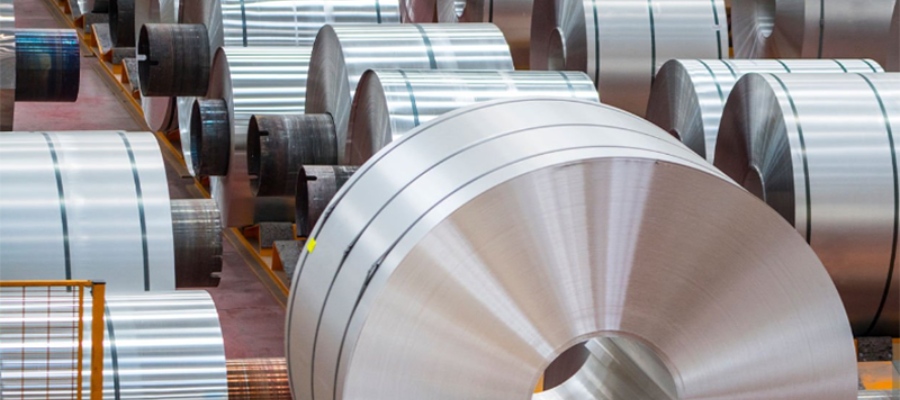
The CR coil means cold rolled coil. The steel rolling is below the temperature of the metal recrystallization. When the steel is produced, the mechanical properties of steel will be improved, and the surface will be finished more smoothly.
Standard grades areSPCC,DC01,DC03andSAE 1008. Most cold rolled steel have Thiknesses between 0.2 mm and 3.0 mm. Cold rolled steel is in high demand in various industries because of the superior surface quality and tight tolerances.
What does "recrystallization temperature" mean during cold rolling?
The recrystallization temperature is the temperature at which the grain structure inside the steel begins to reform after having been deformed. With cold rolling, the work has been performed below this temperature resulting in increased strength and hardness, but a decrease in the ductility of the steel. Usually the steel is annealed to reform its grain structure and thus regain its workability.
How Is CR Coil Manufactured?
The manufacture of CR coil usually consists of the following processes. Hot rolled coil is cleaned by pickling to remove oxide scale. Steel strip is then sent through cold rolling mills to reduce its thickness. The steel is then most often annealed to relieve internal stresses and increase ductility. A temper rolling (skin pass) process is then carried out to improve flatness and surface quality.
Cold Rolled vs Hot Rolled Coil
Cold rolled and hot rolled steels are generally distinguished by whether they are worked at high or low temperatures and by their finished properties. Due to the processing conditions, hot rolled steels are generally worked at higher temperatures, giving a rougher surface finish. Cold rolled steels are worked at lower temperatures, resulting in a smoother surface and tighter dimensional tolerances. Consequently, hot rolled steel is used for structural components and cold rolled steel is used for precision and surface sensitive products.
CR Coil as a Substrate for Coated Steel
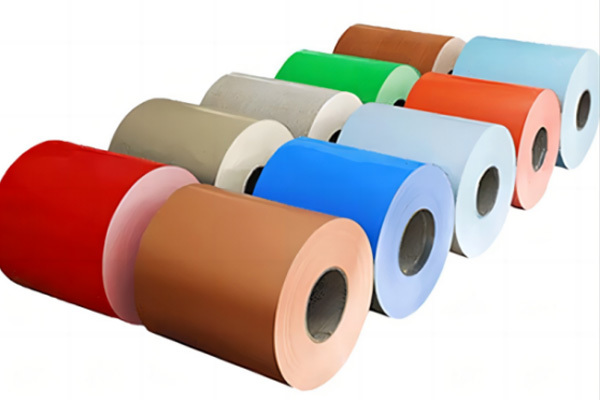
Coil is also one of the commonly used mother material for coated steel products. In a typical galvanizing line, steel is coated with layer of zinc to improve corrosion resistance. This galvanized steel coil (GI) is later coated with paint layers to manufacture pre-painted galvanized steel (PPGI). CR coil has a smooth and even surface that lead to better adhesion of coating and higher quality.
About Cold Rolled Coil Manufacturers
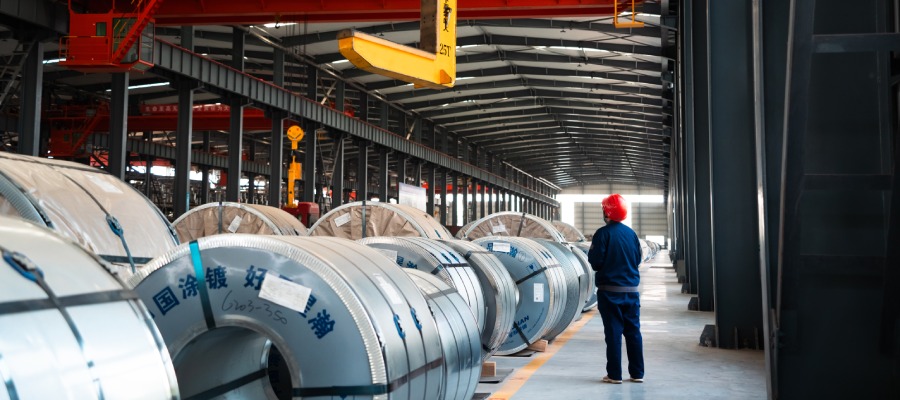
Steel companies make cold rolled coils using fancy rolling mills and careful quality checks. Good suppliers sell them in different sizes and types for industries that make appliances, buildings, and other goods.
Shineyond Group makes and sells steel, shipping cold rolled steel coils and similar stuff like galvanized, galvalume, and pre-painted steel coils to customers everywhere.
FAQ
What does CR coil stand for?
CR coil stands for cold rolled coil, a steel coil produced by cold rolling hot rolled steel.
What thickness is common for CR coils?
Most cold rolled coils are produced in thicknesses between 0.2 mm and 3.0 mm.
Why is CR coil used for galvanized steel?
Because it has a smooth surface and precise dimensions, making it ideal for coating processes.
Conclusion
CR coil is an essential material in modern steel processing. Its smooth surface, higher strength, and precise thickness make it suitable for many industries. In addition, it serves as the base material for important coated products such as GI and PPGI, making it a key component in global steel supply chains.