


Seamless Pipe vs Welded Pipe Guide
When choosing steel pipes for construction, energy, or industrial projects, many buyers compare seamless pipe vs welded pipe. This comparison is important because pipe performance directly affects safety, service life, and overall project cost. Although both products are made from carbon steel or alloy steel, there are clear differences in structure, manufacturing methods, and applications. Understanding seamless vs welded pipe helps buyers select the most suitable option for different working conditions.
What Is a Seamless Pipe?
A seamless pipe is produced from a solid round steel billet. The billet is heated to a high temperature and then pierced to create a hollow shape. After that, the pipe is rolled and sized to reach the required diameter and wall thickness. Since no welding process is involved, the pipe body has no weld seam.
Because of this structure, seamless pipes have uniform strength along the entire length. There is no welded joint that could become a weak point under pressure or stress. This makes seamless pipes highly reliable in demanding environments.
Main characteristics of seamless pipes include:
No welding seam or joint
Dense and uniform steel structure
High pressure and temperature resistance
Good performance in harsh environments
Typical applications of seamless pipes:
Oil and gas transmission pipelines
Boilers and heat exchangers
High-pressure hydraulic systems
Power plants and petrochemical equipment
Mechanical and precision engineering

What Is a Welded Pipe?
A welded pipe is manufactured by forming steel plates or steel strips into a cylindrical shape and then welding the edges together. The welding method depends on the pipe type and usage requirements. After welding, the pipe usually undergoes heat treatment and inspection to ensure quality.
Unlike seamless pipes, welded pipes have a visible or detectable weld seam. However, modern welding technology has greatly improved weld quality, making welded pipes reliable for many applications.
Common types of welded pipes include:
ERW pipes, made by electric resistance welding
LSAW pipes, using longitudinal submerged arc welding
SSAW pipes, produced with spiral submerged arc welding
Main characteristics of welded pipes include:
Lower production cost
Stable wall thickness and outer diameter
Easier production of large diameters
Wide availability and fast delivery
Typical applications of welded pipes:
Water supply and drainage systems
Structural steel and building frameworks
Low- and medium-pressure pipelines
Scaffolding, fencing, and handrails
Piling and foundation projects
Seamless Pipe vs Welded Pipe: Manufacturing Differences
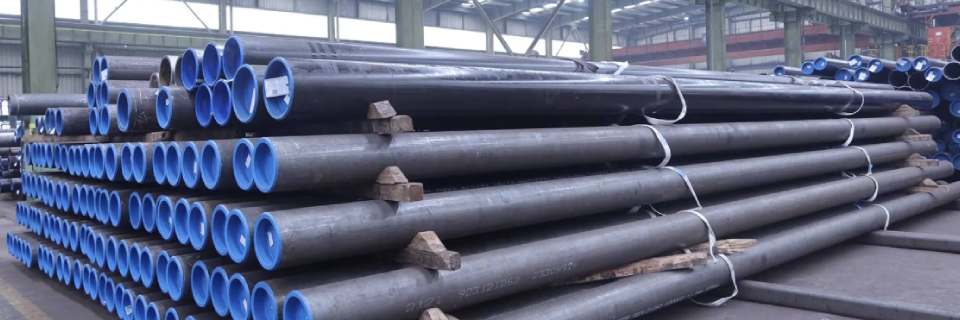
The most basic difference in seamless pipe vs welded pipe lies in the production process. Seamless pipes are formed directly from solid steel, while welded pipes are made from steel sheets or coils joined by welding. This difference affects internal structure, strength distribution, and performance under pressure.
Seamless pipes tend to have better grain continuity, while welded pipes rely on strict quality control of the weld seam to ensure reliability.
Strength and Pressure Performance
When comparing seamless vs welded pipe, pressure resistance is often a key factor. Seamless pipes generally perform better in high-pressure and high-temperature conditions. Without a weld seam, they are less likely to fail under extreme stress.
Welded pipes are suitable for most standard applications. For low- to medium-pressure systems, a high-quality welded pipe can meet all technical requirements while keeping costs under control.
Size Range and Availability
Welded pipes have a clear advantage in size flexibility. They can be produced in very large diameters and long lengths, which is difficult and costly for seamless pipes. For large pipeline projects, welded pipes are often the practical choice.
Seamless pipes are more commonly used in small to medium diameters, especially where precise mechanical properties are required.
Cost Comparison
Cost is another major factor in seamless pipe vs welded pipe decisions. Seamless pipes are usually more expensive because of complex production processes and higher material consumption. Welded pipes are more economical and suitable for projects with tight budgets.
Choosing the right pipe type can significantly reduce overall project costs without compromising safety.
How to Choose Between Seamless and Welded Pipes
You should choose a seamless pipe if:
The system operates under high pressure or high temperature
The application requires maximum safety and reliability
The pipe is used in oil, gas, or power industries
You should choose a welded pipe if:
Cost efficiency is a priority
The working pressure is moderate
Large diameter or long-length pipes are needed
The project involves structural or general construction use
Conclusion
In conclusion, the choice between seamless pipe vs welded pipe depends on application conditions, technical requirements, and budget. Seamless pipes offer superior strength and pressure resistance, making them ideal for critical systems. Welded pipes provide cost advantages, wider size options, and excellent performance for many construction and industrial uses.
By understanding the key differences in seamless vs welded pipe, buyers can make informed decisions and select steel pipes that ensure safety, durability, and long-term performance.