


Rebar vs Wire Mesh in Concrete: Which Is Better?
When reinforcing concrete structures, contractors frequently weigh rebar vs wire mesh in concrete to identify the best choice for strength, long-term durability, and overall cost effectiveness. Both options are common in construction work, yet each one supports different structural needs and roles.
In this guide, we’ll break down the differences between wire mesh vs rebar in concrete, including strength comparison, applications, cost considerations, and how to choose the right reinforcement for your project.
What Is Rebar in Concrete?
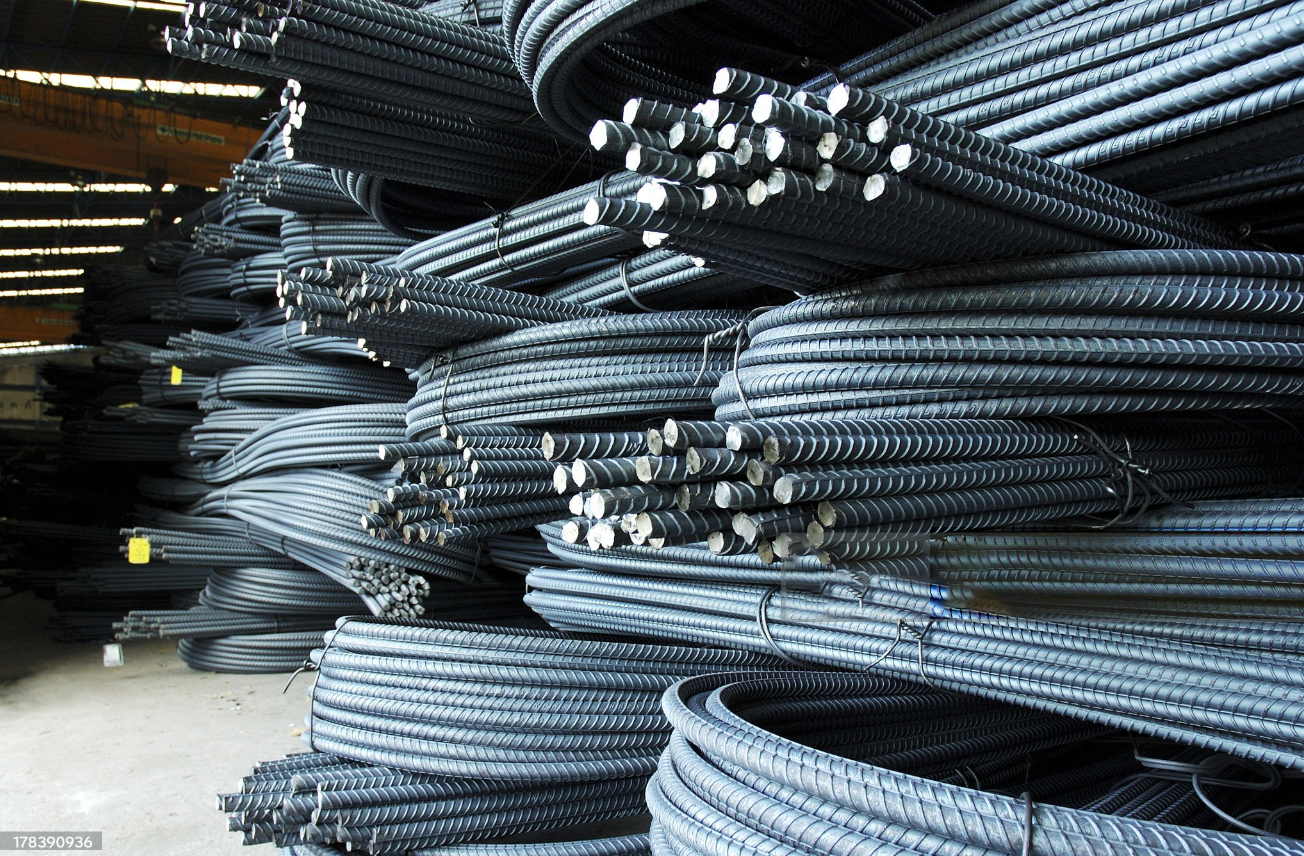
Rebar (reinforcing bar) is a steel bar used to improve the tensile strength of concrete. Since concrete is strong in compression but weak in tension, rebar helps prevent cracking and structural failure.
Rebar is typically made from carbon steel and comes in different grades such as:
Grade 40
Grade 60
Grade 75
HRB400 / HRB500 (commonly used in international markets)
Rebar is commonly used in:
Foundations
Columns
Beams
Bridges
High-rise buildings
Heavy-load industrial floors
Because of its strength and load-bearing capacity, rebar is ideal for structural reinforcement.

What Is Wire Mesh in Concrete?
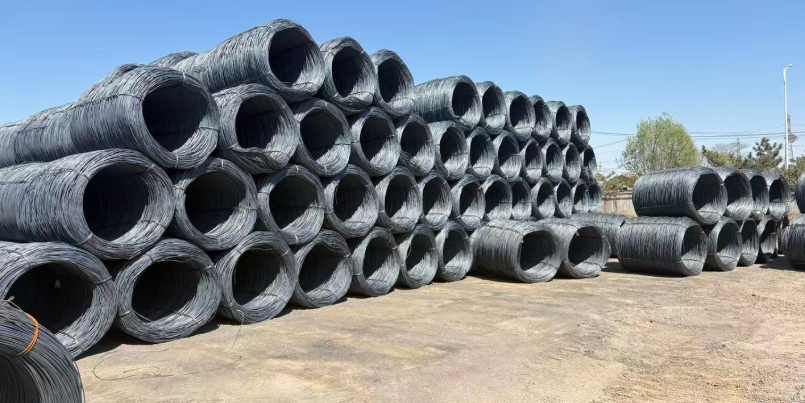
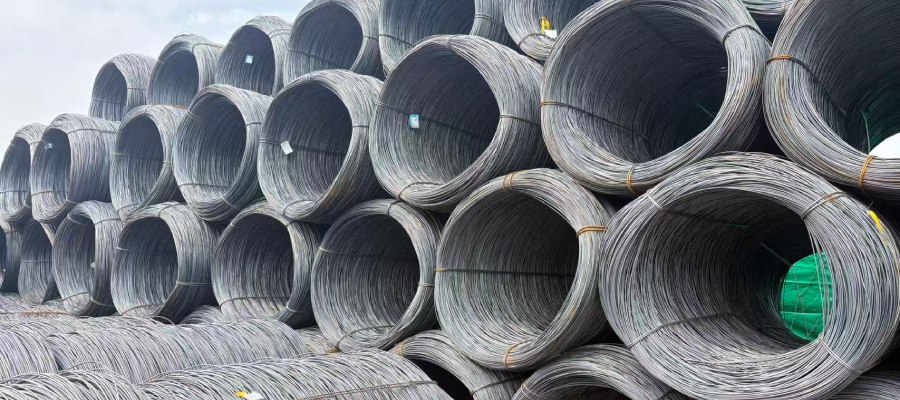
Wire mesh, also known as welded wire fabric (WWF), is made from a grid of intersecting steel wires welded together at regular intervals. It is commonly supplied in sheets or rolls.
Wire mesh is generally used for:
Sidewalks
Driveways
Slabs-on-grade
Residential floors
Pavements
While it helps control surface cracking, wire mesh does not provide the same structural strength as rebar.

Rebar vs Wire Mesh in Concrete: Key Differences
1. Strength and Load Capacity
In the debate of rebar vs wire mesh in concrete, strength is the most important factor.
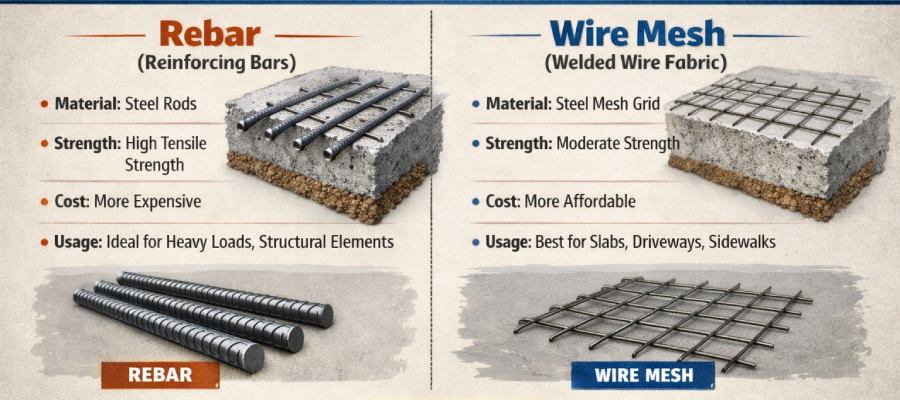
Rebar: High tensile strength, suitable for structural and load-bearing applications.
Wire Mesh: Lower tensile strength, mainly used for crack control.
If your project involves heavy loads or structural elements, rebar is the better choice.
2. Crack Control
When comparing wire mesh vs rebar in concrete, both help reduce cracking, but in different ways.
Wire mesh helps distribute shrinkage cracks evenly across slabs.
Rebar provides deeper reinforcement and prevents large structural cracks.
For light-duty slabs, wire mesh may be sufficient. For structural concrete, rebar is more reliable.
3. Installation
Wire mesh is faster to install in flat slab applications because it comes pre-welded in sheets. However, improper placement (such as mesh sinking to the bottom) reduces its effectiveness.
Rebar requires tying and proper spacing but offers better positioning control within the concrete.
4. Cost Comparison
Wire mesh generally has:
Lower material cost
Lower labor cost for slab applications
Rebar typically has:
Higher material cost
Higher labor cost
Much higher structural performance
When evaluating concrete rebar vs wire mesh, cost should be considered together with long-term structural safety.
Concrete Rebar vs Wire Mesh: When to Use Each?
Choose Rebar If:
The structure is load-bearing
It’s a foundation, column, or beam
The project requires high tensile strength
It’s a commercial or industrial building
Choose Wire Mesh If:
It’s a residential driveway or sidewalk
The slab is non-structural
The main concern is shrinkage crack control
The load requirement is light
Can Rebar and Wire Mesh Be Used Together?
Yes. In some cases, contractors use both systems. Rebar provides structural strength, while wire mesh helps control surface cracking. This combination is common in heavy-duty industrial floors.
Frequently Asked Questions (FAQ)
1. Is wire mesh as strong as rebar in concrete?
No. In the debate of wire mesh vs rebar in concrete, rebar is significantly stronger. Wire mesh controls surface cracks, while rebar provides structural reinforcement and load-bearing strength.
2. Can I use wire mesh instead of rebar?
Wire mesh can replace rebar only in light-duty, non-structural slabs such as sidewalks or residential patios. For foundations, beams, or load-bearing structures, rebar is required.
3. Which is better for a concrete driveway: rebar or wire mesh?
For standard residential driveways, wire mesh is usually sufficient. However, if the driveway supports heavy vehicles or commercial traffic, rebar is the better choice.
4. Does rebar last longer than wire mesh?
Yes. Rebar offers better long-term structural performance, especially when properly coated or protected against corrosion.
Final Verdict: Rebar vs Wire Mesh in Concrete
In the comparison of rebar vs wire mesh in concrete, rebar is the superior option for structural strength and durability. Wire mesh is more suitable for light-duty applications where crack control is the primary goal.
If structural integrity and long-term performance are priorities, rebar is the safer investment.
For construction projects that require high-quality reinforcement materials, working with a reliable steel rebar manufacturer ensures consistent quality and international standard compliance.