


I Beam vs H Beam Explained for Construction Projects
Selecting the appropriate steel beam in contemporary construction and steel framework projects is essential for ensuring strength, safety, and cost-effectiveness. Many buyers, engineers, and contractors often compare I beam vs H beam when designing buildings, bridges, and industrial structures. While these two beams appear alike initially, they are intended for distinct structural functions.
This guide explains what I beams and H beams are, how they differ, and how to choose the right steel beam for your project with clear and practical insight.
Main Differences Between I Beam vs H Beam
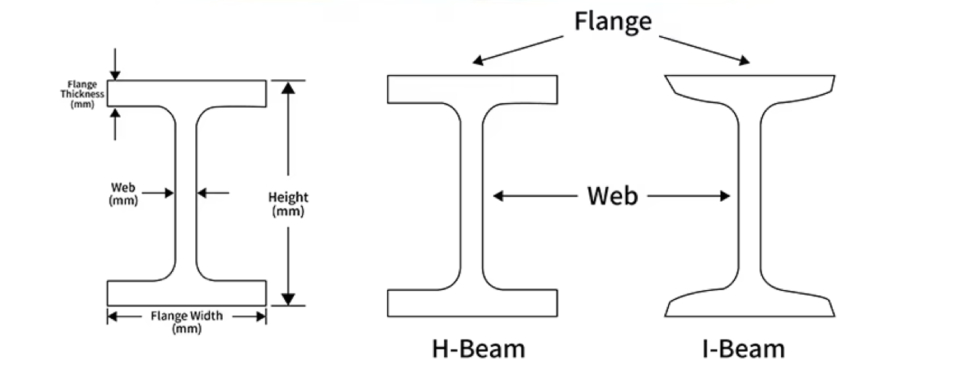
I Beam vs H Beam mainly differ in flange width, web thickness, and load-bearing capacity. An I beam has narrower flanges and a thinner web, making it lighter and more material-efficient, which is ideal for medium-load and secondary structural applications. In contrast, an H beam features wider and thicker flanges with a stronger web, allowing it to handle heavier loads and provide better stability. When comparing I Beam vs H Beam, I beams focus on cost efficiency and flexibility, while H beams are designed for high-strength, primary structural support in large construction projects.
What Is an I Beam?
An I beam, also known as an I-section or steel I-beam, gets its name from its “I”-shaped cross-section. It has a narrow web in the center and wider flanges on the top and bottom.
I beams are typically produced by hot rolling and are designed to carry loads mainly in one direction. Because of their shape, they offer good bending resistance while using less material.
Main Benefits of I Beams
High strength-to-weight ratio
Efficient use of steel material
Good resistance to bending stress
Lower cost compared to heavier beam sections
Common Applications
I beams are widely used in:
Residential and commercial buildings
Floor beams and secondary beams
Light to medium structural frameworks
Platforms and support structures
When evaluating I beam versus H beam, I beams are frequently selected for projects prioritizing weight management and cost-effectiveness.
What Is an H Beam?
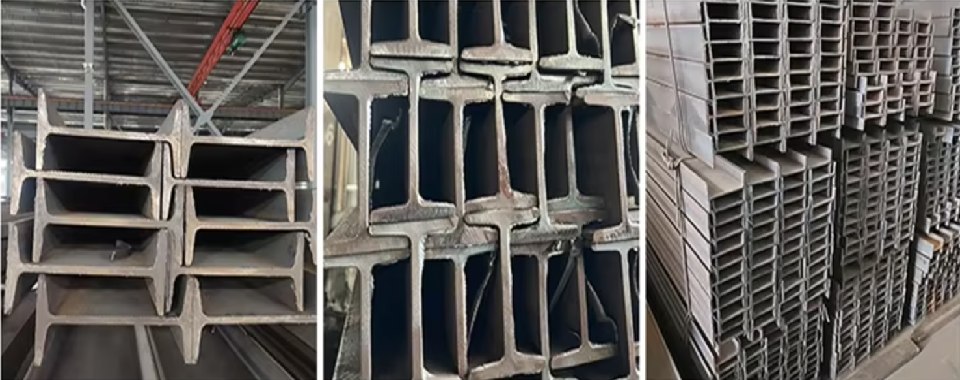
An H beam, also called a wide flange beam, has a cross-section that looks more like the letter “H.” The key difference is that its flanges are wider and thicker, and the web is stronger compared to an I beam.
H beams are designed to handle heavier loads and provide better stability, especially in large-scale or high-load structures.
Main Benefits of H Beams
Excellent load-bearing capacity
Strong resistance to bending and compression
Better structural stability
Suitable for heavy-duty construction
Common Applications
H beams are commonly used in:
High-rise buildings
Bridges and infrastructure projects
Industrial plants and warehouses
Columns and main structural frames
In the I beam vs H beam comparison, H beams are preferred for major load-bearing roles.
I Beam vs H Beam: Key Differences Explained
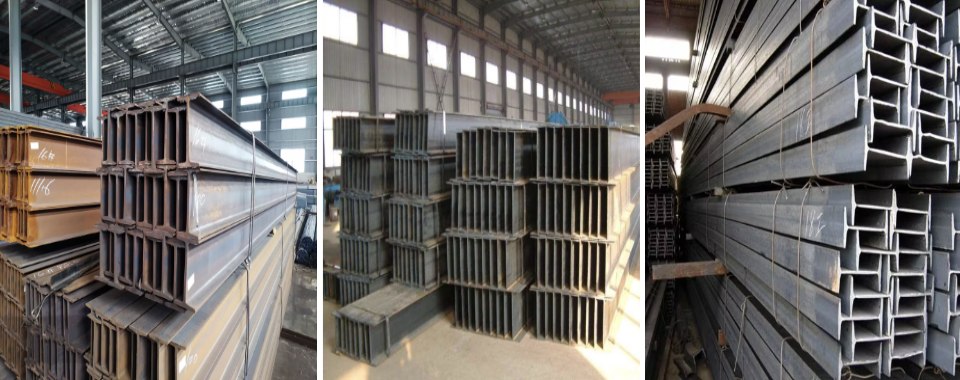
Understanding the difference between I beam vs H beam helps avoid structural risks and unnecessary costs.
| Item | I Beam | H Beam |
|---|---|---|
| Cross-section | Narrow flanges, thinner web | Wide flanges, thicker web |
| Load capacity | Medium | High |
| Weight | Lighter | Heavier |
| Structural role | Secondary support | Primary load-bearing |
| Cost | Lower | Higher |
| Typical use | Floors, small frames | Columns, main structures |
Using I Beams and H Beams Together
In many large construction projects, engineers use both I beams and H beams together to achieve the best structural performance.
H beams act as columns and main supports
I beams connect between H beams to support floors and roofs
This combination is common in steel buildings, factories, and commercial complexes. Using I beams and H beams together helps balance strength, material usage, and overall cost.
How to Choose Between I Beam and H Beam
When deciding between I beam vs H beam, consider the following factors:
1. Load requirements and structural design
2. Span length and building height
3. Role of the beam (main support or secondary support)
4. Budget and material efficiency
5. Local building standards and engineering requirements
For columns and heavy load-bearing structures, H beams are the safer choice. For floor systems and lighter frameworks, I beams are often sufficient and more economical.
Conclusion
The choice between I beam vs H beam depends on how the structure will perform under real working conditions. I beams provide efficiency and cost control, while H beams deliver superior strength and stability.
By understanding the differences and using each beam where it performs best, builders and steel buyers can achieve safer, stronger, and more cost-effective construction results. Selecting the right steel beam—or combining I beams and H beams wisely—ensures long-term structural reliability and performance.